• Welcome to your new Gnomio site

    Now, you are in control!

    Moodle is an open-source Learning Management System (LMS) that provides educators with the tools and features to create and manage online courses. It allows educators to organize course materials, create quizzes and assignments, host discussion forums, and track student progress. Moodle is highly flexible and can be customized to meet the specific needs of different institutions and learning environments.

    Moodle supports both synchronous and asynchronous learning environments, enabling educators to host live webinars, video conferences, and chat sessions, as well as providing a variety of tools that support self-paced learning, including videos, interactive quizzes, and discussion forums. The platform also integrates with other tools and systems, such as Google Apps and plagiarism detection software, to provide a seamless learning experience.

    Moodle is widely used in educational institutions, including universities, K-12 schools, and corporate training programs. It is well-suited to online and blended learning environments and distance education programs. Additionally, Moodle's accessibility features make it a popular choice for learners with disabilities, ensuring that courses are inclusive and accessible to all learners.

    The Moodle community is an active group of users, developers, and educators who contribute to the platform's development and improvement. The community provides support, resources, and documentation for users, as well as a forum for sharing ideas and best practices. Moodle releases regular updates and improvements, ensuring that the platform remains up-to-date with the latest technologies and best practices.

    Links of interest:

    (You can edit or remove this text)

Available courses

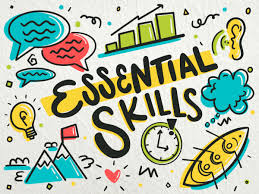
Essential Skills

Essential skills are the fundamental abilities and competencies that individuals require to succeed in both personal and professional life. They form the foundation for learning, problem-solving, effective communication, and productive participation in society. These skills are not only critical for academic achievement but are also highly valued in the workplace and in everyday life, enabling individuals to adapt to changing environments and meet new challenges effectively.

Essential skills are often categorized into cognitive, interpersonal, technical, and personal development skills. Cognitive skills include critical thinking, problem-solving, decision-making, creativity, and numeracy. These skills enable individuals to analyze information, evaluate options, make informed choices, and develop innovative solutions. For example, a learner with strong critical thinking skills can assess the reliability of sources, solve complex problems, and develop logical arguments.

Communication skills are another vital set of essential skills. They include reading, writing, listening, speaking, and digital communication. Effective communication allows individuals to express ideas clearly, collaborate with others, and build meaningful relationships. In professional contexts, communication skills are crucial for teamwork, customer service, negotiations, and leadership. For instance, a trainer with strong communication skills can convey instructions effectively and provide constructive feedback to learners.

Interpersonal skills encompass teamwork, empathy, emotional intelligence, and conflict resolution. These skills help individuals interact harmoniously with others, manage relationships, and contribute to collaborative efforts. Emotional intelligence, for example, allows individuals to understand their own emotions, recognize others’ feelings, and respond appropriately in social or work situations.

Technical and digital skills are increasingly essential in today’s technology-driven world. These include basic computer literacy, proficiency in software applications, internet navigation, and the use of digital tools for communication, research, and problem-solving. Digital competence ensures that individuals can access information, perform tasks efficiently, and adapt to technological changes in education, work, and daily life.

Personal development skills such as time management, self-motivation, resilience, adaptability, and goal-setting are also crucial. These skills allow individuals to organize their work, remain focused, cope with challenges, and pursue continuous growth. For example, a professional who can manage time effectively will meet deadlines, balance responsibilities, and enhance productivity.

The importance of essential skills cannot be overstated. In education, they empower learners to engage in active learning, understand complex concepts, and achieve academic success. In the workplace, they enhance employability, performance, and career advancement. Societally, essential skills enable individuals to participate fully in civic life, make informed decisions, and contribute to community development.

Developing essential skills requires intentional practice, reflection, and application. Educational institutions and training programs often integrate skill-building activities into curricula, such as problem-solving exercises, group projects, presentations, and digital literacy tasks. Continuous learning and self-improvement further strengthen these skills over time.

In conclusion, essential skills are the building blocks for personal, academic, and professional success. They include cognitive abilities, communication, interpersonal skills, technical competence, and personal development skills. Mastery of these skills equips individuals to navigate challenges, collaborate effectively, adapt to change, and achieve their goals. In a rapidly evolving world, fostering essential skills is vital for lifelong learning, employability, and meaningful participation in society.

Education Administration

Education administration refers to the process of planning, organizing, directing, and controlling all activities within an educational institution to ensure that teaching and learning objectives are effectively achieved. It involves the management of human, financial, and material resources in a way that supports quality education and promotes institutional development. Education administration is a specialized branch of management that applies general management principles within the unique context of schools, colleges, universities, and other learning centers.

At its core, education administration focuses on creating an environment conducive to learning by coordinating the efforts of teachers, learners, support staff, and other stakeholders. Administrators are responsible for setting institutional goals, developing policies, implementing programs, and monitoring progress. They ensure that the curriculum is delivered effectively, that educational standards are maintained, and that institutional objectives align with national and regional educational policies.

One of the main functions of education administration is planning. This involves forecasting future needs, setting priorities, and allocating resources to meet institutional goals. Planning may include preparing budgets, designing school programs, scheduling classes, and predicting enrollment trends. Effective planning ensures that schools operate smoothly and that students have access to quality learning experiences.

Another key function is organizing, which involves structuring the institution’s human and material resources to achieve maximum efficiency. This includes defining roles and responsibilities, establishing reporting relationships, and creating departmental or functional structures. Organizing also encompasses the development of administrative procedures and communication channels that facilitate collaboration among staff and stakeholders.

Staff management is a central aspect of education administration. Administrators are responsible for recruiting, training, supervising, and evaluating teachers and support staff. They provide professional development opportunities to enhance the skills of personnel and ensure that educators remain motivated and committed to their work. Effective staff management contributes to higher teaching standards, better student outcomes, and overall institutional success.

Financial management is equally critical in education administration. Administrators must prepare and monitor budgets, manage expenditures, and ensure that financial resources are used efficiently and transparently. Sound financial administration supports the procurement of teaching materials, maintenance of facilities, and implementation of development projects.

Monitoring and evaluation form another important component. Education administrators assess the performance of teachers, the progress of learners, and the overall effectiveness of educational programs. This helps identify strengths, weaknesses, and areas that require improvement. Data from monitoring and evaluation inform decision-making and guide future planning.

Education administration also involves policy implementation and leadership. Administrators must ensure that educational policies, regulations, and standards set by national authorities are adhered to within their institutions. Leadership in education requires vision, effective communication, problem-solving skills, and the ability to inspire staff and learners to achieve institutional goals.

In today’s dynamic educational environment, administrators must also embrace technology and innovation. Digital tools, learning management systems, and data analytics are increasingly used to enhance administration efficiency, improve communication, and monitor learning outcomes.

In conclusion, education administration is a multifaceted process that combines planning, organization, leadership, and management to ensure the effective functioning of educational institutions. It is central to maintaining high educational standards, promoting professional development among staff, managing resources efficiently, and fostering an environment that supports teaching and learning. Effective education administration contributes significantly to the development of human capital and the overall advancement of society.